
Twin Health
Twin HealthMedical
4.6170.00 Reviews
- Version
- 4.200.0
- Installs
- 100.00K
- Age Rating
- Everyone
Screenshots
Our Review of Twin Health
 Analysis by Appyee
I approached Twin Health as a tool for people who want more structure around metabolic health, rather than as a general wellness app that simply counts steps or displays motivational messages. Developed by Twin Health, it sits in the medical category and is free to use, with an Everyone age rating. Its central appeal is the promise of turning health information into practical guidance, but the real question is whether that guidance remains useful after the first burst of curiosity disappears.
My initial impression was that the app makes the most sense when I treat it as part of an ongoing routine, not as a one-time health check. The first week can feel engaging because a dedicated metabolic-health service gives everyday choices more context. Instead of looking at exercise, food, sleep, or weight as disconnected topics, I can think about them as parts of the same goal. That broader view is more useful than another isolated tracker, especially for someone who has tried several health apps and abandoned them because each one demanded attention without helping connect the dots.
What the first week feels like
The first-week appeal comes from focus. Twin Health is not trying to be a social network, a recipe collection, or a replacement for every medical service. Its store summary presents it as precision health technology supporting metabolic health, and that gives the experience a clear direction. I found that focus helpful because it encourages me to ask a more practical question: which daily choices are actually helping me maintain healthier patterns?
That question matters for people managing concerns such as blood-sugar control, weight, energy, or other metabolic goals, but I would not mistake the app for a diagnosis. A health app can help organize observations and routines; it should not be used to change medication or dismiss symptoms without professional advice. If a person is already receiving medical care, the most sensible role for this app is as a companion to that care, provided the user and clinician are comfortable with the arrangement.
During the opening days, the strongest benefit is psychological rather than technical. A focused health environment can make vague intentions feel more concrete. “I should eat better” is easy to postpone, while a routine built around observing patterns gives me something more specific to reflect on. I would recommend starting with one or two behaviors instead of trying to redesign an entire lifestyle immediately. That reduces the chance that the app becomes another demanding project.
A useful early workflow is to check the app at a fixed moment, such as after breakfast or before bed, and use that time to review the day calmly. I would avoid opening it repeatedly whenever I feel uncertain about a choice. Constant checking can turn health support into reassurance-seeking, which is tiring and rarely sustainable. The app is more valuable when it helps me make a decision and move on, rather than keeping me inside a loop of monitoring.
Its audience is also clearer than the broad “wellness” label suggests. Someone who wants a metabolic-health routine may appreciate the specialized direction. Someone looking only for a basic step counter, a simple calorie diary, or a quick meditation app may find the experience more involved than necessary. In those cases, a simpler alternative could be better because it asks for less attention and still covers the user’s actual goal.
How to make the early experience useful
I would begin by defining what success means before relying on the app. Is the goal to become more consistent with meals, notice how routines affect energy, support a weight-management plan, or prepare better questions for a healthcare appointment? Without that personal definition, even thoughtful health guidance can become a stream of suggestions with no clear destination.
Another practical tip is to keep a short note outside the app about unusual days. Travel, illness, celebrations, poor sleep, and stressful workdays can all change how I feel. If I later review a pattern without remembering those circumstances, I may draw the wrong conclusion. The app can support reflection, but my own context still matters. This is one of the less obvious trade-offs of precision-oriented health tools: more detailed feedback can create an illusion of certainty if I forget that real life is messy.
There is also a privacy and trust question that deserves attention before making the app part of a long-term routine. Medical and lifestyle information is more sensitive than ordinary app activity. I would read the current privacy and account terms carefully, understand what information I am comfortable entering, and avoid treating convenience as a reason to share everything. That is not a criticism unique to Twin Health; it is a sensible condition for using any digital medical service.
The app has built a visible user base, with more than one hundred thousand installs and an average rating of 4.6 from roughly two thousand ratings. Those figures suggest that the concept resonates with many people, although they do not tell me whether it will fit my habits or health situation. Reviews can indicate general satisfaction, but personal usefulness depends much more on whether the app’s approach matches the kind of support I need.
Where the value has to come from after the novelty fades
After the first month, the question changes. The excitement of exploring a new health tool usually declines, and the app must earn its place through recurring value. For me, that value would come from helping turn observations into repeatable decisions. If each session merely tells me information I already know, I will eventually stop opening it. If it helps me notice a pattern and choose a manageable adjustment, it has a reason to remain installed.
The strongest long-term use case is maintenance. Metabolic health is rarely improved by one unusually disciplined week. It is shaped by ordinary weeks: rushed breakfasts, late dinners, inconsistent sleep, missed workouts, and the occasional meal that does not fit the plan. A useful companion should help me return to the routine after those disruptions instead of making one imperfect day feel like failure.
I would use Twin Health most deliberately during transitions. Starting a new work schedule, changing eating habits, recovering from a period of inactivity, or preparing for a discussion with a clinician can create a reason to review progress more carefully. Once the routine becomes stable, I would expect to use it less intensely. That is not necessarily a weakness. A good maintenance tool should support a lighter rhythm when constant attention is no longer needed.
The trade-off is that long-term benefit depends on my willingness to engage honestly. No app can produce useful guidance from a routine that is incomplete, rushed, or shaped by what I wish were true. If I only record ideal days, the resulting picture will be misleading. I would rather have a modest, consistent record than a perfect-looking one that does not represent my life.
This is where Twin Health differs from a basic fitness tracker. A tracker can be excellent for immediate feedback such as movement totals or workout duration. A food diary can be better for someone whose only priority is recording meals. A general health dashboard may be preferable for people who want one place to view several unrelated metrics. Twin Health’s advantage is its narrower metabolic-health lens, but that same specialization means it may not replace those tools for every user.
It is also not the right choice for someone who dislikes health journaling altogether. The app may make a routine feel more informed, but it cannot remove the need for attention. If entering information, reviewing recommendations, or reflecting on habits feels like a burden from the beginning, the best alternative may be a simpler system: one calendar reminder, a paper log, or a conversation with a healthcare professional. More technology is not automatically better support.
The maintenance burden in ordinary life
The maintenance burden is not just the number of taps involved. It is the mental effort of remembering to use the app, interpreting feedback, and deciding what to do next. I find that burden manageable only when the app is attached to an existing habit. Checking it after a regular meal, during a weekly planning session, or before a scheduled health appointment is more realistic than expecting myself to remember it at random times.
I would also resist the temptation to respond to every fluctuation. Health patterns do not become meaningful because I inspect them more often. A single unusual day may reflect poor sleep, stress, travel, or circumstances outside my control. The better workflow is to look for repeated signals and then make one change at a time. That approach protects me from overcorrecting and makes it easier to tell which adjustment actually helped.
For families, the Everyone rating makes the app broadly accessible from an age-classification perspective, but that should not be confused with universal suitability. A child, older adult, or person with a complex medical condition may need a different level of supervision and explanation. I would be especially careful about using any health recommendation for someone else without involving the appropriate adult or clinician.
Technical compatibility is another practical consideration. The current version is 4.200.0 and requires at least Android 9, so anyone using an older device should check compatibility before building a routine around it. That requirement is not especially demanding for many current phones, but an aging device can still create friction through slow performance, limited storage, or unreliable notifications. A health routine is only as dependable as the device and habits supporting it.
Because the app is free, the initial barrier is low. That makes it easier to try without committing money, but it can also encourage casual installation without a clear plan. I would give it a defined trial period with a specific question to answer, such as whether it helps me maintain a meal routine or prepare better observations for a medical conversation. If it does not improve that task, keeping it installed out of guilt will not create value.
What can cause fatigue over time
The biggest source of fatigue is likely the feeling that health is always being evaluated. Even helpful feedback can become emotionally heavy when every meal, missed workout, or irregular day feels like evidence of failure. I would use the app with a maintenance mindset: the goal is to learn enough to make sustainable choices, not to pursue a flawless record.
Another source of fatigue is advice that feels too broad for the situation. A recommendation may be sensible in general but difficult during shift work, parenting, travel, disability, limited food access, or a demanding treatment schedule. When that happens, I would treat the guidance as a starting point rather than a command. The app cannot fully understand every personal constraint, and I should not judge myself harshly for adapting a suggestion.
There is also a risk of replacing professional dialogue with app dialogue. Twin Health may help me organize questions and notice changes, but it should not become the only voice I trust about a medical concern. New or worsening symptoms deserve appropriate medical attention. Likewise, medication decisions belong with a qualified professional, even if an app appears to show an encouraging trend.
To limit fatigue, I would schedule a weekly review rather than reacting continuously. I would select one behavior to maintain, one obstacle to solve, and one question to carry forward. This turns the app into a planning aid instead of a constant judge. It also creates a useful test of recurring value: if the weekly review never changes what I do, the app may not be earning its place.
My long-term verdict
After the novelty fades, Twin Health still has a credible role for people who want a focused metabolic-health companion and are prepared to participate consistently. Its strongest quality is its specific purpose. Rather than scattering attention across unrelated wellness features, it encourages me to think about metabolic health as an ongoing pattern that needs maintenance.
I would recommend it to an adult who wants more structure than a basic activity tracker provides, especially someone willing to review habits and use the resulting observations in sensible conversations with healthcare professionals. I would also recommend approaching it gradually: establish a clear goal, connect use to an existing routine, and judge progress over patterns rather than isolated days.
I would skip it if I only need a lightweight pedometer, a straightforward meal log, or a general-purpose health dashboard. I would also look elsewhere if digital monitoring tends to increase anxiety, guilt, or compulsive checking. In those situations, a simpler tool or human support may offer better long-term results with less mental overhead.
The app’s free price makes experimentation easy, and its established presence, reflected in over one hundred thousand installs, gives it enough visibility to be worth considering. Still, popularity is not the same as personal fit. The deciding factor is whether its metabolic-health focus helps me make calmer, more consistent decisions month after month.
My final view is positive but measured: the lasting value comes from the routine built around Twin Health, not from opening it once and expecting a complete answer. If I use it to notice patterns, choose manageable changes, and support—not replace—medical care, it can justify a permanent place on my phone. If I treat it as another source of daily pressure or expect it to do the work of a clinician, the initial appeal will probably wear off quickly.
Verdict
Strengths of Twin Health
- Personalized guidance adapts to your health data and daily habits.
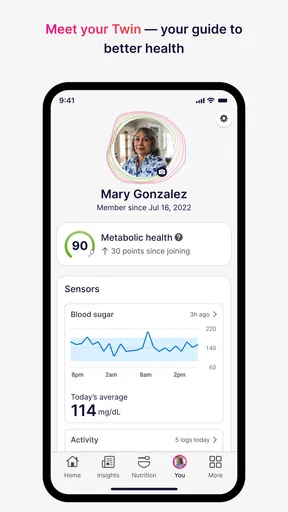
- Tracks multiple wellness areas, including glucose, sleep, and activity.
- Encourages practical lifestyle changes instead of relying only on medication.
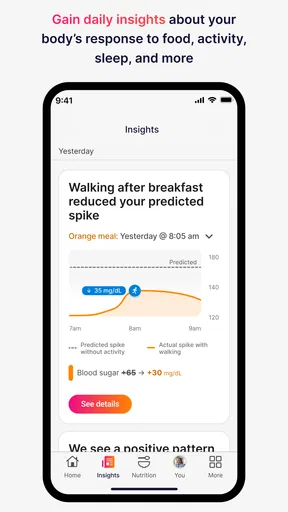
- Progress insights can help users identify patterns in their routines.
- May support better communication with healthcare professionals.
Limitations of Twin Health
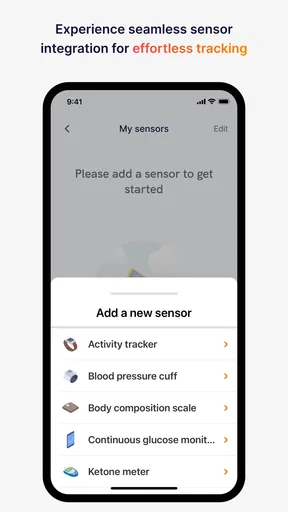
- Some features may require compatible wearable devices or connected sensors.
- The app may not be available to users outside supported regions or programs.
- Health recommendations can feel demanding when daily tracking is inconsistent.
- Certain services may depend on a subscription, employer, or healthcare provider.
- It should complement—not replace—professional medical advice or treatment.
Similar Picks in This Category
View All
WebMD: Symptom Checker
WebMD, LLC4.1

Microphone Amplifier
DOSA Apps4.2

Anatomy Learning - 3D Anatomy
3D Medical OU4.5

Period Tracker and Calendar
SimpleInnovation4.9

GoodRx: Prescription Coupons
GoodRx4.8

CVS Health
CVS Pharmacy4.5
Frequently Asked Questions
What is Twin Health and how does it work?
Twin Health is a digital health platform designed to help users improve metabolic wellness through personalized guidance. It may combine information from connected devices, health questionnaires, lifestyle data, and, in some programs, clinical measurements. The app uses these details to provide recommendations related to nutrition, activity, sleep, and other habits. Available features can vary depending on your location, subscription, healthcare provider, and program eligibility.
Is Twin Health a replacement for my doctor or medical treatment?
No. Twin Health should be considered a wellness and health-management support tool, not a replacement for a qualified doctor, diagnosis, prescribed medication, or emergency care. Recommendations are intended to support healthier habits and may be personalized using the information you provide, but they cannot account for every medical condition. Always discuss significant changes to your diet, exercise, medication, or treatment plan with a healthcare professional.
What information and devices does Twin Health require?
The information required depends on the Twin Health program you join. You may be asked to provide details about your health history, goals, meals, exercise, sleep, and daily routines. Some plans may also support connected devices or sensors that track measurements such as activity, heart rate, glucose, or other wellness indicators. Before registering, review the app’s permissions and privacy policy to understand what data is collected and how it is used.
Is Twin Health free to download and use?
The availability and cost of Twin Health can differ by country, employer, healthcare organization, insurance arrangement, or subscription plan. Downloading the app may be free, while access to coaching, monitoring, connected devices, clinical support, or advanced features could require eligibility or payment. Check the official store listing and the terms shown during registration carefully, especially for recurring charges, trial periods, cancellation rules, and included services.
Who can use Twin Health, and are there any limitations?
Twin Health is generally intended for adults seeking structured support for metabolic health and lifestyle improvement, but eligibility depends on the specific program and region. Certain medical conditions, pregnancy, age restrictions, device requirements, or healthcare arrangements may affect access. The app may also rely on compatible smartphones and supported sensors. Users should provide accurate information and contact Twin Health or a medical professional if they are unsure whether the service is appropriate.
